
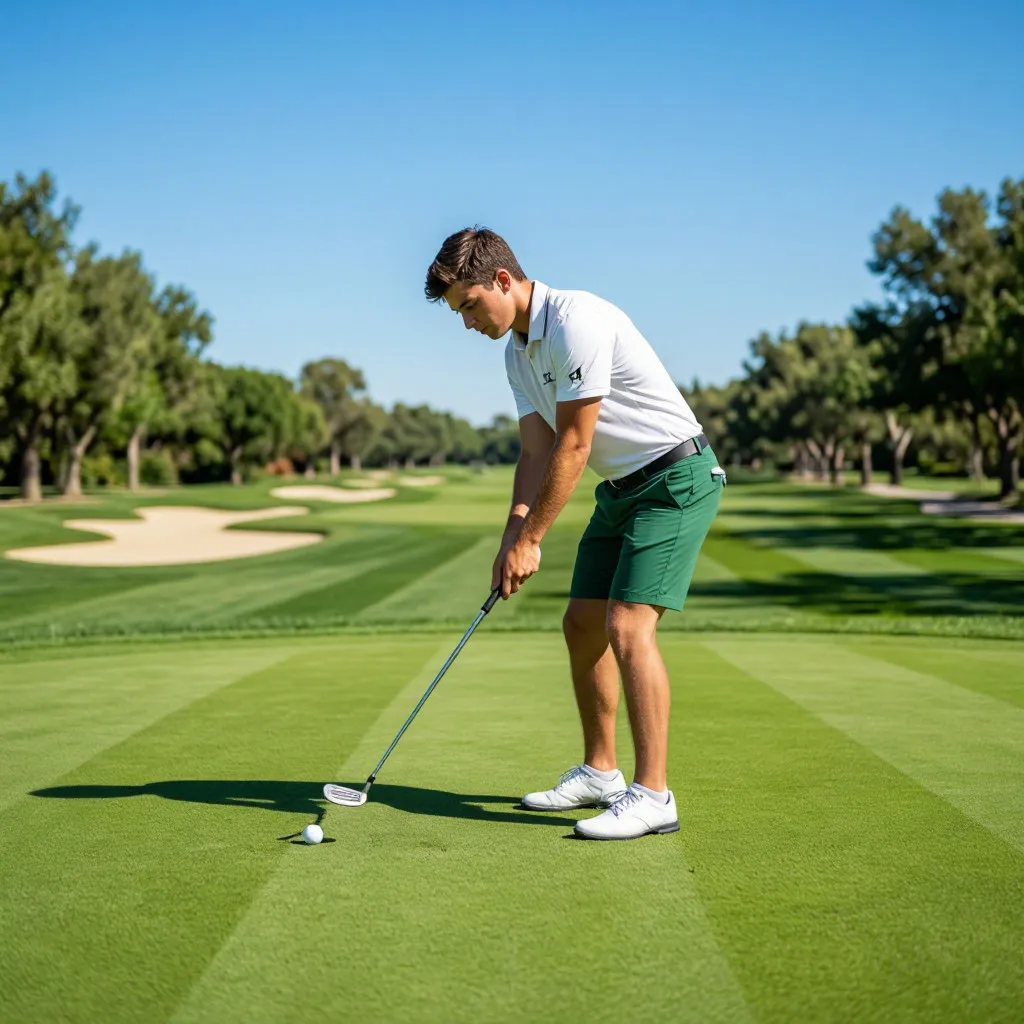
Standing on the green forty feet away from the cup, most golfers feel a sense of dread rather than excitement. While sinking a monster putt is a thrilling bonus, the realistic goal of any long-distance putt is simply to leave the ball close enough for an effortless tap-in. Achieving this consistency requires a highly developed sense of lag putting distance control, which is the single most important skill for protecting your scorecard from devastating three-putts. By shifting your focus from the perfect line to the perfect speed, you can confidently navigate massive greens and keep your scores low.
Before you even take a practice stroke, your brain needs to gather environmental data to gauge how much force is required to move the ball. Speed control is not a mechanical calculation; it is a sensory adjustment based on how the turf behaves under different conditions. Golfers who struggle with distance often ignore these subtle factors, relying solely on visual estimation.
Developing a keen eye for green conditions helps you calibrate your putting stroke before stepping up to address the ball:
By taking a moment to observe these natural variables during your warm-up, you can adjust your touch to the specific conditions of the day. This preparation ensures that your practice strokes feel natural and aligned with the actual speed of the playing surface.
Once you have assessed the speed of the green, the challenge shifts to executing a stroke that matches the required distance. The most common error in long-distance putting is using a short backswing combined with a sudden, jerky acceleration through impact. To achieve elite control, you must maintain a consistent, pendulum-like tempo while letting the length of your swing dictate how far the ball travels.
Visualizing how your stroke amplitude correlates with distance allows you to build a reliable mental map on the green:
| Target distance | Backswing length | Follow-through length | Tempo focus | Ideal landing zone |
|---|---|---|---|---|
| Thirty feet | To the trail big toe | To the lead big toe | Smooth, even pace | Within two feet of cup |
| Forty-five feet | Past the trail foot | Past the lead foot | Gravity-driven drop | Within three feet of cup |
| Sixty feet | Two inches past the foot | Two inches past the foot | Constant acceleration | Within four feet of cup |
This structured framework helps eliminate wrist movement, which is the primary enemy of consistent distance control. When your backswing and follow-through are symmetrical, the putter head strikes the ball with a natural, predictable energy transfer that yields highly repeatable results.
No amount of theory can replace the muscle memory built through targeted practice on the putting green. Instead of aiming directly at a tiny cup from sixty feet away, which creates unnecessary tension, you should train your brain to target a larger safety zone. Your goal is to consistently roll the ball into a virtual three-foot circle around the hole, making your second putt completely stress-free.
To build this intuitive feel and eliminate the anxiety of long putts, integrate these proven exercises into your practice routine:
These exercises remove the visual pressure of watching a ball miss the cup, allowing your nervous system to focus purely on the relationship between effort and distance. Over time, this sensory feedback translates into a relaxed, confident stroke on the course.
The final step in mastering long putts is creating a repeatable pre-shot routine that eases tension and locks in your focus. Stand behind the ball, look at the hole, and make three practice strokes while keeping your eyes on your target to feed your brain the necessary spatial information. Step up, take one last look at the cup to internalize the distance, and let your natural athleticism take over. By combining this mental preparation with a calibrated stroke, you will eliminate three-putts and enjoy a much more stress-free short game.