
Golf is steadily transforming from a tradition-focused sport into a technologically enhanced discipline where precision, convenience, and data are reshaping the athlete’s experience. Robotic caddies and smart drones are central to this shift. They simplify logistics, expand strategic opportunities, and bring real-time analytics directly onto the course. As innovation accelerates, these devices are no longer experimental prototypes—they are active participants in modern golf. This article explores how robotic caddies and drones are changing the sport, the benefits they offer, and what the next decade might look like for players, coaches, and courses worldwide.
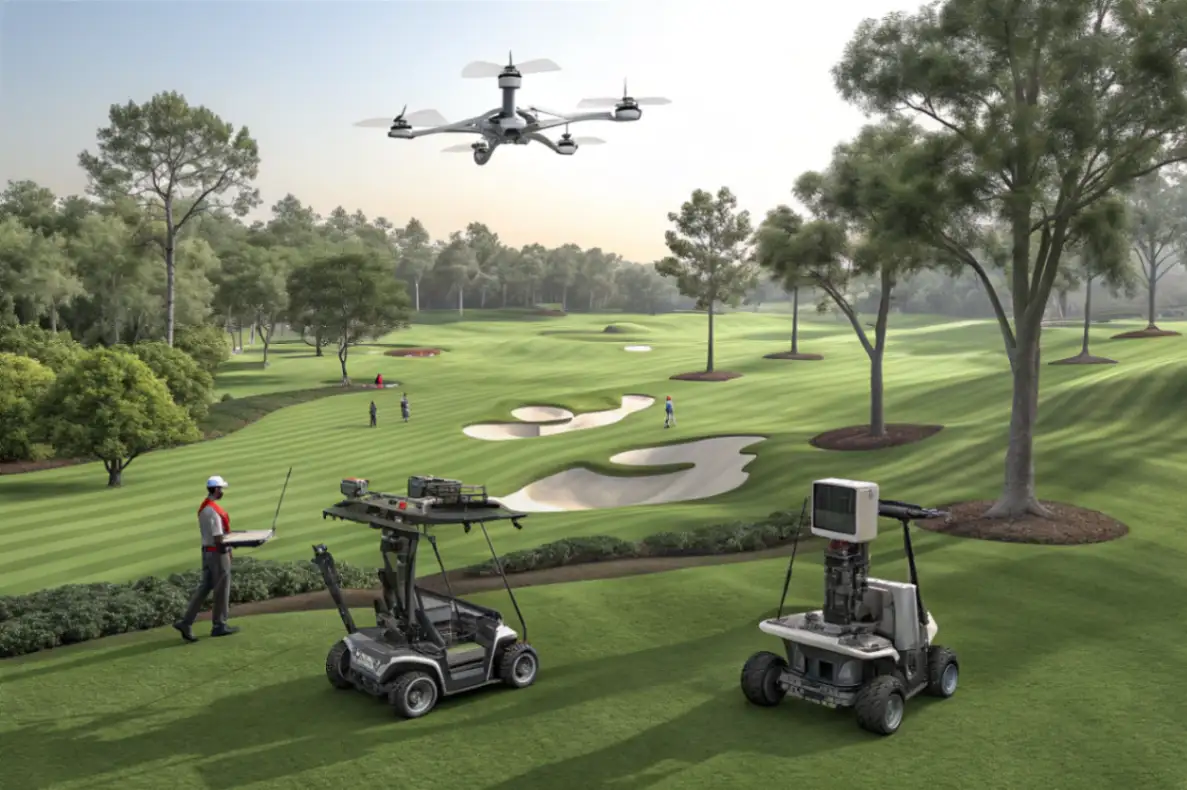
Robotic caddies are redefining how players navigate the course. Unlike traditional push carts or human assistants, today’s robotic models use advanced GPS mapping, obstacle detection, smart following systems, and AI-based route optimization. Their primary purpose is to remove the physical burden of carrying or pushing equipment, ensuring players conserve energy for actual play.
Modern robotic caddies are engineered for stability, terrain adaptation, and seamless movement. Thanks to intelligent sensors, they can travel alongside golfers or follow predetermined GPS paths with impressive accuracy. This level of autonomy is made possible through machine-learning algorithms that continuously refine navigation behavior. At the same time, smartphone apps give players complete control over speed, distance, movement, and course interaction. For golfers, this combination of autonomy and precision dramatically improves the rhythm of play and reduces distractions.
Smart drones have become indispensable tools for course managers. With aerial imaging, drones can monitor turf health, track moisture levels, detect anomalies, and provide real-time comparisons of course conditions. For groundskeeping teams, this means decisions can be based on highly detailed, data-driven visuals that would be impossible to gather from the ground alone.
Drones are particularly effective for mapping tee-to-green layouts, optimizing irrigation, and identifying areas requiring maintenance. By producing high-resolution terrain scans, drones help superintendents allocate resources more efficiently while elevating the quality of playing surfaces. Clubs around the world report measurable improvements in turf longevity and course uniformity after integrating drone-based analytics into their maintenance strategies.
For tournament organizers and professional players, drones offer additional strategic advantages. The aerial perspective they provide can be used to enhance broadcast coverage, assist in hazard mapping, and help players study wind patterns. During practice rounds, athletes increasingly rely on drone footage to visualize hole geometry, evaluate elevation shifts, and plan more accurate approach shots.
As regulations evolve, many competitions may eventually allow drone-generated analytics during warm-ups or pre-round preparations. This would grant players a level of environmental awareness previously reserved for the most elite teams and coaching programs.
Before diving deeper, it’s useful to highlight the core benefits that robotic caddies and drones bring to the golfing ecosystem. These innovations are not simply convenient; they are transforming how players and course operators think, plan, and execute their strategies. Below is a brief list summarizing their most impactful contributions, framed within the broader context of game improvement and operational efficiency:
These advantages demonstrate why robotics and drones are now considered essential technologies rather than futuristic luxuries. After exploring these benefits, it becomes clearer why many golf clubs are investing heavily in automation as part of long-term development plans.
To better understand their synergy, the following table provides a concise comparison between robotic caddies and smart drones. It includes their primary functions, strategic benefits, and main users. This structured overview helps clarify how both technologies serve different yet interconnected roles in the evolution of golf.
| Technology | Primary Function | Key Benefit | Main Users |
|---|---|---|---|
| Robotic Caddies | Autonomous equipment transport | Reduces physical fatigue and distractions | Amateur & professional golfers |
| Smart Drones | Aerial imaging and data collection | Enhances course strategy and maintenance | Course managers & competitive players |
This comparison demonstrates how the two technologies are not competing solutions but complementary tools that serve distinct purposes. Robotic caddies focus on enhancing the player’s physical experience, while drones provide crucial environmental and strategic insights. Together, they create a technologically integrated game that is more efficient, more enjoyable, and more data informed.
The coming decade will bring even deeper integration of robotics, drones, and AI-driven analytics. Robotic caddies are expected to evolve into full-scale tactical assistants that analyze swing data, suggest clubs, and provide real-time performance feedback. Using machine learning, these devices will be able to recognize patterns in a player’s performance and offer tailored recommendations for improving consistency.
At the same time, drones will play a growing role in environmental management and tournament logistics. Expect to see automated drone fleets monitoring weather changes, updating yardages based on real-time conditions, and producing instant aerial broadcasts. For coaches, drones will deliver high-angle swing diagnostics and trajectory analysis that help refine technique with unprecedented precision.
While the future looks promising, several important discussions are emerging about the ethical and regulatory implications of widespread robotic assistance. Golf’s traditional emphasis on fairness, challenge, and personal responsibility raises questions about how much technological support is appropriate during competitive play.
Additionally, privacy concerns must be addressed when drones are used for imaging. Clubs must establish clear protocols to ensure that data collection respects the boundaries of players and nearby properties. As with any expanding technology, balanced regulation will be essential to maintain the integrity and spirit of the game.
Everyday golfers will gradually see greater availability of affordable robotic caddies, with improved battery life, smoother navigation, and integrated performance apps. Golf clubs will increasingly adopt drone-based tools to maintain higher-quality greens at lower operational costs. Lessons, practice sessions, and coaching programs will rely heavily on drone footage and AI feedback systems that provide tangible, actionable data.
For many players, the presence of robots and drones will become as normal as GPS rangefinders and launch monitors—tools that elevate skill development, enhance enjoyment, and ensure a more dynamic golfing environment. Ultimately, these innovations will make the sport more accessible and engaging, especially for younger generations who naturally gravitate toward high-tech solutions.
Robotic caddies and smart drones are not replacing the essence of golf—they are expanding it. By reducing physical strain, improving course conditions, enhancing strategic planning, and offering unprecedented access to data, these technologies are helping golfers of all levels experience the sport with greater insight and efficiency. As adoption continues to grow, golf will steadily become a model of how tradition and technology can evolve together, shaping a future that is sustainable, competitive, and exciting for everyone involved.