
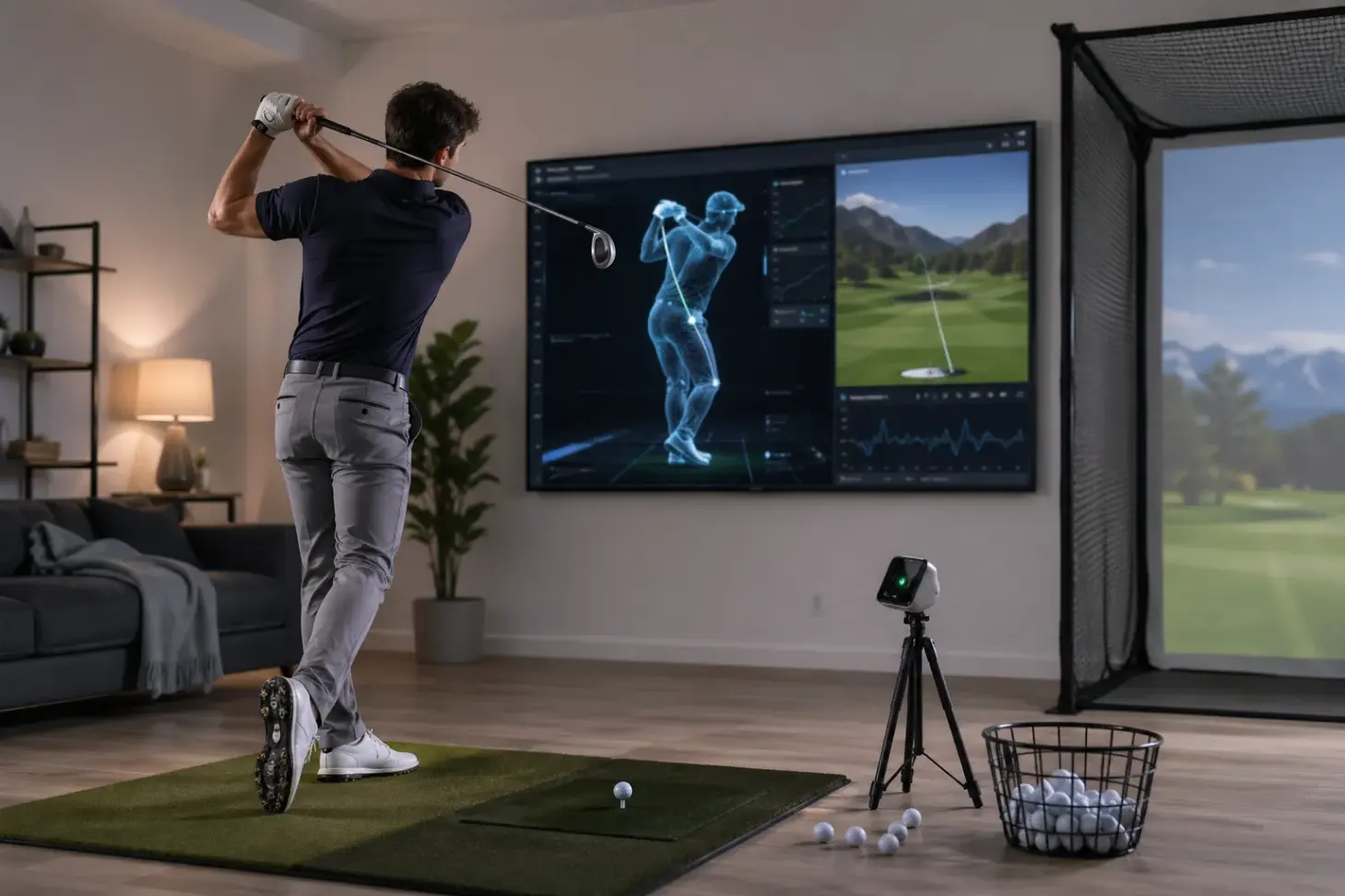
Golf has always been a sport of precision, repetition, and patience. For decades, improvement depended on time spent at the range, access to coaches, and the ability to analyze your own mistakes through feel and memory. That model is changing. Artificial intelligence has quietly moved into living rooms, garages, and backyards, turning everyday spaces into personalized training environments. What used to require expensive lessons and advanced facilities is now available through a smartphone, a sensor, and a bit of space to swing.
AI-powered tools are not just gimmicks or novelty gadgets. They represent a shift in how players understand their swings, track progress, and build consistency. From motion analysis to virtual simulations, the modern golfer can now train smarter, not just harder, without leaving home.
Traditional golf coaching relies heavily on observation and interpretation. A coach watches your swing, offers corrections, and helps you build better habits over time. While effective, this approach depends on limited sessions and subjective feedback. AI introduces a layer of objectivity and continuity that changes the learning process entirely.
AI systems use cameras, motion sensors, and machine learning models to break down every part of your swing into measurable data. Instead of hearing “your backswing is too steep,” you see exact angles, timing differences, and comparisons to professional players. The feedback becomes specific, visual, and repeatable.
Another key difference lies in accessibility. AI coaching does not depend on scheduling lessons or traveling to a golf course. It is always available, whether you have ten minutes after work or a full training session planned for the weekend. This consistency plays a major role in skill development, especially for amateur golfers who struggle to maintain regular practice routines.
AI also adapts. Over time, it learns your patterns, strengths, and weaknesses. The more you train, the more personalized the feedback becomes. Instead of generic advice, the system begins to anticipate errors and guide you toward incremental improvements that fit your natural swing style.
The effectiveness of AI coaching comes from a combination of hardware and software working together. Cameras capture movement, sensors track motion, and algorithms interpret everything in real time. Understanding these components helps explain why modern systems feel so precise and responsive.
Motion tracking is at the core. Using either smartphone cameras or dedicated sensors attached to the club or body, AI systems create a digital model of your swing. This model allows the software to analyze angles, speed, tempo, and sequencing with remarkable accuracy.
Computer vision plays an equally important role. Advanced apps can recognize body positions without requiring physical markers, turning a simple video recording into a detailed biomechanical analysis. This makes training more convenient and less intrusive.
Simulation technology adds another dimension. By combining swing data with physics engines, AI tools can predict ball flight, distance, and spin. Even without hitting a real ball, golfers can understand how changes in their swing affect outcomes.
To see how these technologies come together in real products, it helps to compare a few popular tools currently used by golfers training at home.
Before diving deeper into real-world use, the following table highlights how different AI-based golf training solutions approach practice and feedback.
| Tool | Core technology | Key feature | Best use case |
|---|---|---|---|
| Zepp Golf | Motion sensor | Swing metrics tracking | Beginners improving consistency |
| Arccos Caddie | Smart sensors + AI | Shot tracking and course strategy | Data-driven players |
| HackMotion | Wrist sensor | Wrist angle analysis | Fixing swing mechanics |
| Golfzon Simulator | Full simulation system | Realistic virtual courses | Indoor practice and gameplay |
| V1 Golf App | Video analysis | Swing comparison tools | Visual learners |
Each of these tools focuses on a different aspect of the game, but they all rely on AI to transform raw data into actionable insights. The variety also means that golfers can choose solutions that match their goals, budget, and available space.
AI in golf is not theoretical. Thousands of players already use these systems daily, often combining multiple tools to create a complete training setup at home. What makes these examples interesting is how they fit into real routines rather than ideal scenarios.
One common setup involves a smartphone app paired with a tripod. Apps like V1 Golf or GolfFix allow players to record their swings and receive instant feedback. The software overlays body positions, highlights flaws, and suggests corrections. For many amateurs, this replaces the need for frequent coaching sessions.
Another popular option is wearable sensors. Devices like HackMotion or Zepp attach to the glove or club and provide real-time data during practice swings. Instead of guessing whether your wrist position is correct, you see immediate feedback after every attempt. This accelerates learning because mistakes are corrected instantly.
Home simulators represent the more advanced end of the spectrum. Systems like SkyTrak or Golfzon combine launch monitors with projection screens to recreate the experience of playing on a course. While these setups require more investment, they offer a level of immersion that keeps practice engaging and realistic.
There are also hybrid approaches that blend simplicity and effectiveness:
• A golfer using a phone app for swing analysis and a net for indoor hitting can practice daily without leaving the house.
• A player tracking shots with Arccos sensors can review performance trends and adjust training focus accordingly.
• Someone working on mechanics might combine HackMotion data with video feedback to refine specific movements.
These setups demonstrate how flexible AI training can be. There is no single “correct” system. Instead, golfers build personalized environments that evolve with their skills.
What stands out across these examples is the shift from passive practice to active learning. Every swing generates feedback, every session produces data, and every adjustment is measurable. This level of engagement makes training more efficient and often more enjoyable.
The process behind AI feedback may feel instant, but it involves several layers of analysis working together. Understanding this process helps explain why the results are so detailed and reliable.
First, the system captures your movement. This can happen through video recording or sensor input. The raw data includes body positions, club path, speed, and timing.
Next, the AI identifies key points in the swing. These include address position, backswing peak, downswing transition, impact, and follow-through. Each phase is analyzed separately to detect inconsistencies or inefficiencies.
Then comes comparison. The system matches your data against a database of professional swings or optimized models. This is where machine learning plays a role, as the AI has been trained on thousands of examples to recognize patterns.
Finally, the software generates feedback. This can take several forms:
• Visual overlays that show correct versus actual positions.
• Numerical metrics such as swing speed, tempo ratio, and angles.
• Simple recommendations that translate complex data into clear actions.
This layered approach allows AI to go beyond surface-level observations. It does not just tell you that something is wrong; it explains why and how to fix it.
Another advantage is consistency. Unlike human observation, which can vary depending on the coach or session, AI applies the same analytical framework every time. This makes progress easier to track and reduces confusion.
AI coaching offers clear advantages, but it is not a complete replacement for traditional methods. Understanding both sides helps set realistic expectations and get the most out of these tools.
One of the biggest benefits is convenience. Training at home removes barriers such as travel, weather, and scheduling. This leads to more frequent practice, which is essential for improvement.
Another strength is precision. AI provides detailed, objective feedback that is difficult to achieve through self-analysis. Even small errors become visible, allowing players to make targeted adjustments.
Cost efficiency is also worth noting. While some systems require an upfront investment, they can reduce the need for regular coaching sessions over time. For many golfers, this makes advanced training more accessible.
At the same time, there are limitations:
• AI cannot fully replace the experience and intuition of a skilled coach.
• Some systems require calibration and proper setup to deliver accurate results.
• Overreliance on data can lead to overthinking, especially for beginners.
The best approach often combines AI with occasional professional guidance. This balance ensures that technical improvements align with overall performance and strategy.
AI technology is evolving rapidly, and its role in golf training is likely to expand even further. Future systems will become more integrated, more intuitive, and more personalized.
One area of development is real-time coaching. Instead of reviewing swings after the fact, players will receive instant feedback during the motion itself. This could come through audio cues, wearable devices, or even augmented reality displays.
Another trend is deeper personalization. As AI systems collect more data over time, they will build highly detailed profiles of individual players. Training programs will adapt automatically, focusing on the areas that matter most for each golfer.
Virtual reality also holds potential. Imagine practicing on a digital replica of a famous course, with AI analyzing every shot and suggesting adjustments based on real conditions. This level of immersion could make home training even more engaging.
Integration with health and fitness data is another promising direction. AI could connect swing mechanics with physical conditioning, helping players improve flexibility, strength, and injury prevention alongside their technique.
What remains constant is the goal: making improvement more accessible and efficient. AI does not change the fundamentals of golf, but it changes how players interact with those fundamentals on a daily basis.
AI has transformed home golf training from a limited substitute into a powerful alternative. It brings structure, feedback, and personalization into an environment that was once defined by guesswork. Whether through simple apps or advanced simulators, golfers now have tools that support consistent improvement without relying entirely on external resources.
The most effective use of AI lies in balance. It works best when combined with practical experience, occasional coaching, and a clear understanding of personal goals. Used wisely, it turns every swing into an opportunity to learn and every session into measurable progress.